


Is Your Office Worth the Commute?
We asked 600+ professionals exactly what it takes to make the office worth showing up for.

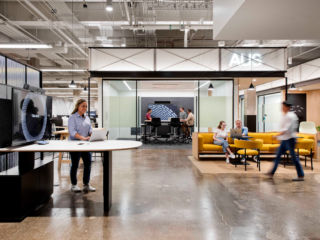
The office refresh happens all the time. New paint, a feature wall, lounge chairs that photograph well... And six months later: the same problem. People aren't coming in, the conference room is a daily frustration, leadership is wondering what went wrong.
After years of watching what actually moves the needle, we wanted to know if what we were seeing held up at scale. So we commissioned original research through The Harris Poll, surveying 600+ professionals on what they actually need from their offices today. The findings didn't surprise us. They confirmed it.
Here's what the data — and the field — are telling us about where the real opportunity is.
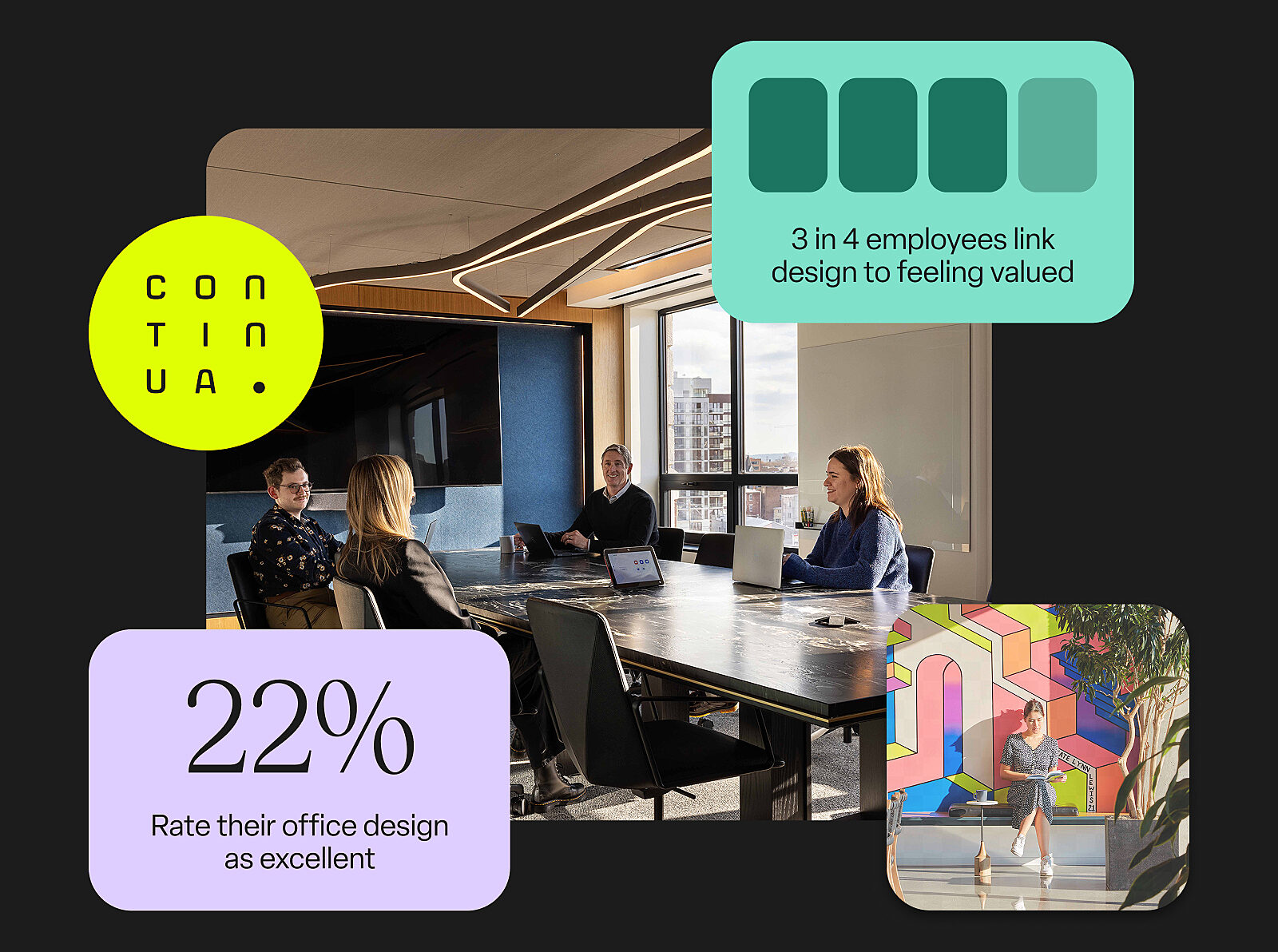
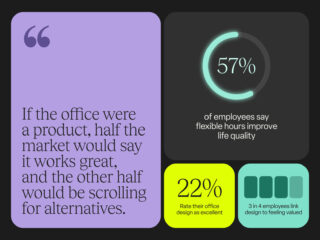
A clear disconnect exists in today's workplaces: while most employees tie office design to feeling valued, only 22% of workers rate their office design as excellent.
That means more than three-quarters of the workforce is walking into a space they'd describe as mediocre at best. That's not a design preference — that's a culture signal, broadcast through every room, every chair, every malfunctioning display.
74% of hybrid workers say they'd come in more often if the office were designed around how they actually work. The commute has become a vote of confidence. Right now, a lot of offices are losing that vote.
Most offices fall into one of two traps.
The first is the beautiful space that doesn't function. Gorgeous materials, thoughtful aesthetic, maybe even a living wall — but the meeting starts with ten minutes of HDMI troubleshooting. Sound bounces off every hard surface. The person dialing in from home can hear the room but can't see it. The design nailed the vibe… but missed the point.
The second is the tech-forward space that feels sterile. What actually brings people in is hospitality-driven design and ergonomic workspaces that make the office feel considered rather than assigned. The research backs this up — 73% of workers say they need tech-enabled meeting rooms to do their jobs effectively, yet too many offices still treat AV as an afterthought, something to sort out after the furniture is installed and the walls are painted. The result is a space that looks good in photos and fails in real use.
This is where we think differently — and where smart integration turns the gap into an advantage.
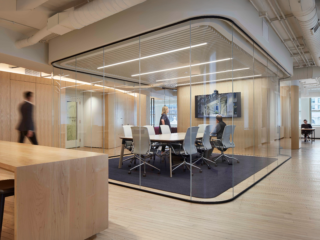
When furniture, technology, and architectural systems are designed together from day one, something shifts. The camera placement informs the table shape. The acoustic treatment informs the wall design. The lighting is calibrated for both faces and screens, not just the mood board. Technology doesn't get bolted on at the end; it's embedded in the architecture itself.
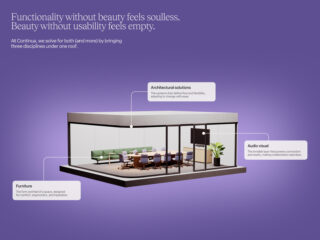
Think about the difference between a room where technology is planned versus one where it's tolerated.
In the planned room, displays are positioned at the right height and angle for the table configuration. Audio is tuned so that every seat hears clearly and every microphone picks up without feedback. The person joining remotely is on equal footing with the person in the room. Hybrid equity isn't an aspiration — it's built into the physical space.
Personal space is part of shared culture.
One of the more surprising findings in our research: 89% of workers want an assigned desk, yet hot-desking remains widespread. An assigned space isn't about being precious — it's about belonging. It signals: you have a place here.
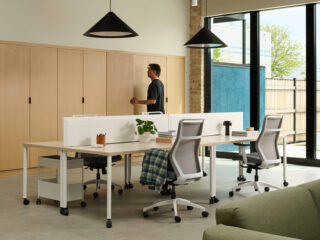
The gap between what employees consider essential and what offices actually provide runs through the whole list:
- Natural light: 86% say it matters. Many offices are still lit like casinos.
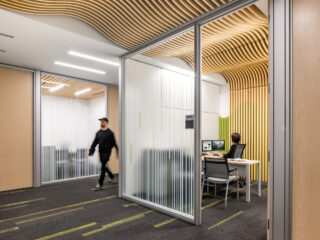
- Acoustic pods: 62% say they need them for focused calls and private conversations. Most offices don't have them.
- Wellness rooms: 59% rate them as important. Still treated as a bonus, not a baseline.
These aren't luxury features. They're the functional requirements of a workforce that has spent the last several years working from home — and now has a very clear sense of what a good work environment feels like.
The organizations that are winning the return-to-office conversation are treating the workplace as a strategic asset, not a line item.
Beauty isn't enough. Workers want offices that perform, that flex around how they actually work, and that send one clear message through every design decision: we thought about you when we built this.
That's what integration delivers. Not just a well-furnished room. Not just a room with good tech. A space where every element supports the people in it — where the design and the technology and the architecture are working together toward the same outcome. Pretty is a starting point. Functional is the standard. Integration is the advantage.
Magnetic, Not Mandatory — Continua's first research report, commissioned through The Harris Poll — draws on 600+ U.S. professionals to surface what employees actually want from their workplaces and where most offices still fall short. Download the full report to see what the findings mean for how we design spaces people actually want to be in.