




Making Space for Self-Care in the Workplace.
Our top solutions for bringing wellbeing into the everyday workplace.
We’re more connected and technology-driven than ever, but constant connection comes with its own demands. In a workday that asks us to be constantly “on”, moments to step away to pause and recharge matter more than ever.
The spaces around us directly influence how we feel, connect, and perform. For workplace designers, the opportunity is to look beyond wellness amenities and build more choice into the everyday experience. Because self-care looks different for everyone, thoughtful planning can give people more ways to experience the workday - from acoustics and ergonomics, to privacy and movement.
This Self-Care Awareness Month, we're exploring where moments of self-care can happen at work through three dimensions of workplace wellbeing - psychological, physical, and social - and what they mean for the spaces we create.
Self-care doesn't always mean stepping away from work. Sometimes, it's having enough control over your surroundings to work in a way that feels right for you.
Psychological: Reduce sensory distraction and create opportunities for privacy.
In an open workplace, privacy can be a form of self-care. Research links access to quiet space and greater environmental control to better workplace satisfaction and reduced work-related fatigue.
Herman Miller’s Bay Work Pod and Framery’s acoustic pods create more contained settings within an open plan, giving people a place to focus, take a confidential call, or simply step away from the activity around them.
Framery Gradus Focus supports uninterrupted individual work with adjustable lighting and ventilation, while Framery One Lounge offers a more relaxed setting with an integrated sofa. For neurodivergent workers, research also points to the value of environmental control and spaces that reduce sensory distraction.

Herman Miller Bay Work Pod
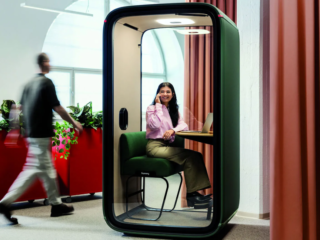
Framery One Lounge
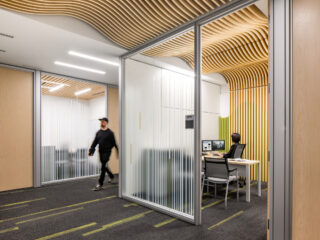
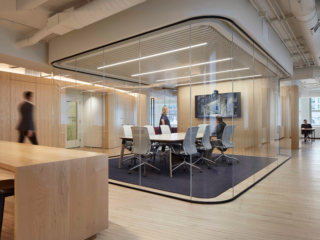
Beyond individual pods, DIRTT’s modular wall systems give designers more ways to build privacy and acoustic separation into an open plan. Its Double Pane Glass Walls offer the visual openness of glass with improved acoustic performance for speech privacy, helping create more contained spaces without closing them off completely. Solid wall assemblies provide another level of separation where greater privacy is needed, and the modular system can be reconfigured as workplace needs evolve.

Physical: Prioritize movement.
Self-care starts with feeling comfortable in your body throughout the workday. Ergonomic furniture makes it easier to change posture, move, and work in ways that support individual needs.
Sit-to-stand desks are a simple way to build more choice into the workday. The goal isn't to replace sitting with standing, but to avoid staying in one position for too long. Research shows an association between increasing discomfort and decreasing productivity. Herman Miller experts recommend alternating between sitting and standing throughout the workday, with 5–20 minutes of standing each hour helping introduce greater postural variety.
Herman Miller has been advancing workplace ergonomics since 1960, with sit-to-stand solutions designed for different workstyles and environments. The Nevi Sit-to-Stand makes changing positions easy with one-touch electric adjustment and integrated cord management. The Spout Sit-to-Stand Table brings height adjustability to a more flexible, multi-use setting, with colorful finishes and wood veneers that make it feel at home beyond the traditional workstation.
For more on the importance of movement throughout the workday, explore Herman Miller's Sit, Stand, Move, Repeat.

Herman Miller Nevi Sit-to-Stand Desk
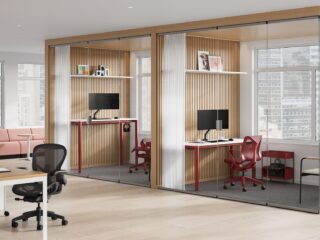
Herman Miller Spout Sit-to-Stand Table
Social: Create moments of connection beyond meetings.
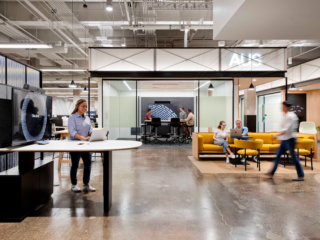
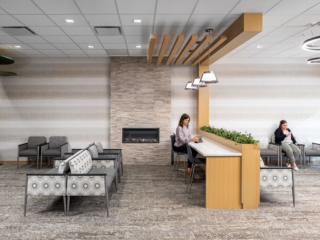
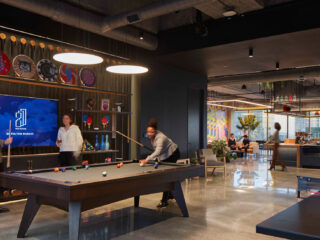
The workday needs more than places to focus. It also needs places to shift gears. A walk outside, coffee with a colleague, or a game of pool in a shared lounge can create a natural break between periods of concentrated work.
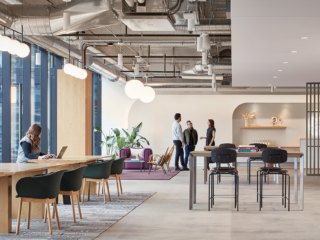
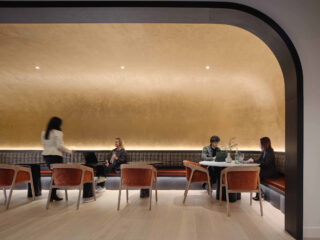
Our recent projects show how those transitions can be designed into the workplace from the start. 800 W Fulton creates a network of social hubs and elevated amenities that invite people to move, gather and stay awhile. Edelman New York weaves outdoor spaces into the workplace experience, making a change of setting an easy part of the daily rhythm.

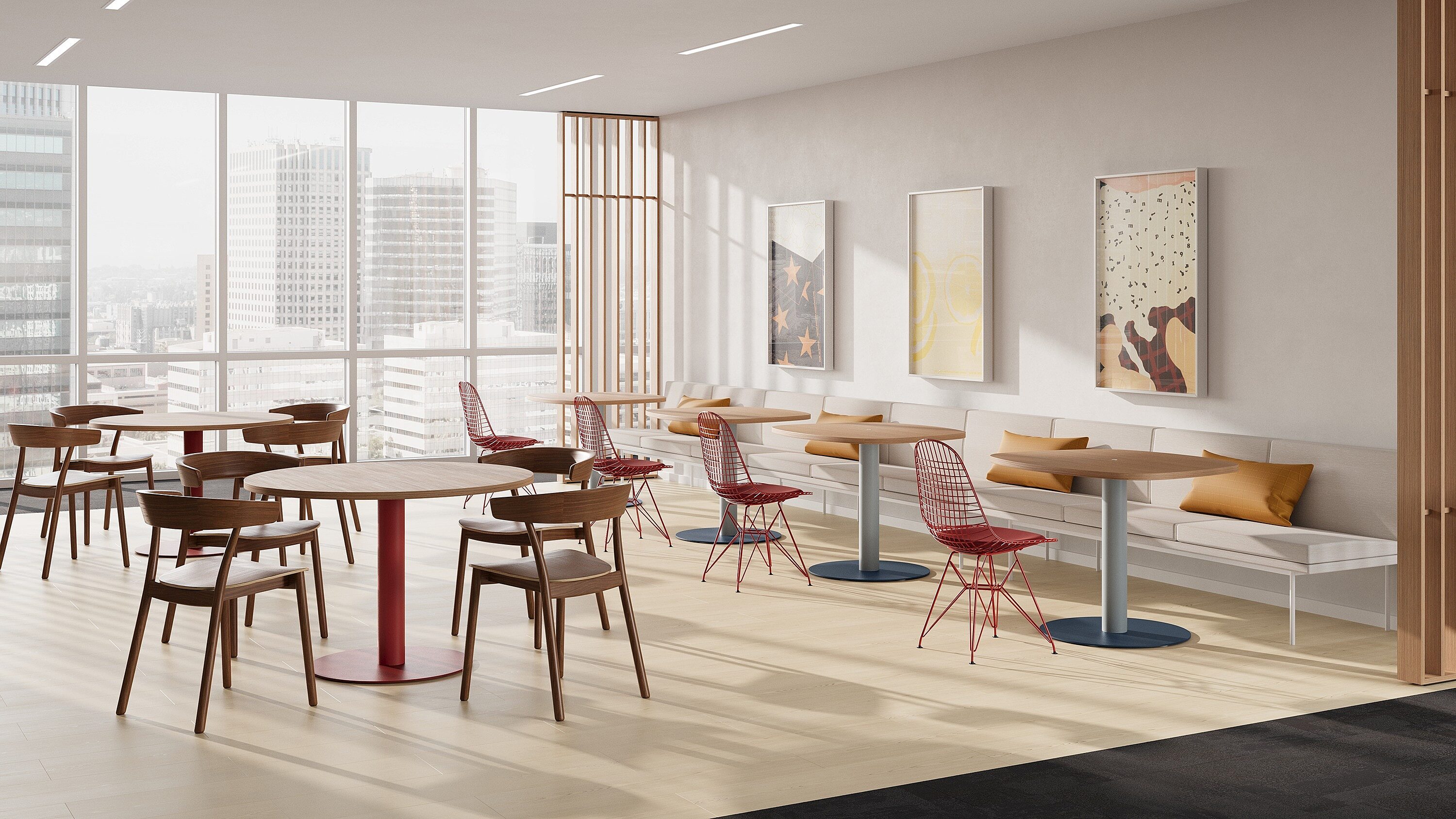
Modular systems like Herman Miller’s Chadwick allow lounge settings to be reconfigured as needs change, creating distinct areas for conversation, collaboration, or a change of scenery. Paired with the Headway Café Table, the same setting can support a quick coffee with a colleague or a shift in where work happens.
And sometimes, the best reset is simply stepping outside. Outdoor settings create another layer of choice in the workday, giving people space to get some fresh air, connect, or take a break from screens. Muuto’s Settle Collection brings a relaxed, residential feel to outdoor environments, while the Linear Steel Collection offers tables, chairs and benches designed for everything from lunch to informal collaboration.


Our workdays are changing, and with the pace of work showing no signs of slowing, the workplace needs to change with us. That means designing for more than productivity alone, with environments that support the full rhythm of the day.
Self-care is part of that evolution. When wellbeing is considered at the forefront of workplace design, the office offers opportunities for teams to pause and restore focus as a natural part of the workday.